Monday, August 21, 2006

Why wood and graphite?

Kevin Kelly explains why he uses a pencil.

A pencil can generate megabytes of text, needs no batteries, and has no user manual. It is comfortable to hold, it smells good, and it is relaxing to turn around in your hand as you try to think of the right words. Pencils don’t need ink; all they need is a sharpener. They are warm and friendly; they have souls.

Sunday, August 20, 2006

John Version 7.0

Up! Up! And away!

Your results:
You are Superman


Superman
80%
Spider-Man
55%
Iron Man
55%
The Flash
55%
Catwoman
55%
Robin
52%
Green Lantern
50%
Hulk
45%
Batman
45%
Supergirl
40%
Wonder Woman
40%
You are mild-mannered, good,
strong and you love to help others.


Click here to take the Superhero Personality Test

Tuesday, August 15, 2006

Show Exxon Who's Boss!

My experiences have led me to believe that we "need" much less than we think we do. Furthermore I believe that one of the greatest needs of 21st-century North Americans is a simplification of life. We have too much "stuff," want more "stuff," work more to get more "stuff," have less time to use our "stuff" as well as do things that really matter with people who are beings that really matter, have more "stuff" to worry about and maintain, and less have less energy to do all of it! I would love to see if you prove me right by your reaction to what I just said and what follows. :-P

The book by Chris Balish nudges us in the right direction. His book, How to Live Well Without Owning a Car: Save Money, Breathe Easier, and Get More Mileage Out of Life was the subject of a great Morning Edition NPR story this morning. Listen to it here.

The publisher notes:

Between rising gas prices, endless car payments, and countless hours spent in gridlocked traffic, do you ever get the feeling that you don’t own your car, but rather your car owns you? Car-free convert Chris Balish shows why kicking car dependency could be the soundest and sanest lifestyle change you can make, and provides realistic strategies for making the leap. From saving money to building a better world, even diehard autoholics will find hundreds of reasons to set out on the (car-free) road less traveled.

• The first practical, accessible, and sensible guide to living in North America without owning a car.
• Exposes the true costs of car ownership and shows how getting rid of your car can simplify your life and put you on the road to financial freedom.
• Packed with realistic, economical alternatives to owning a car, including chapters on carsharing, carpooling, and even car-free dating.
• Includes more than 100 real-world tips, strategies, and success stories from people who are happily car-free or "car-lite," from cities to suburbs.
• According to a 2004 American Automobile Association study, the average American spends $8,410 per year (roughly $700 per month) to own a vehicle.

Low-Tech Superiority


In an article from 2003 entitled No more pencils in high-tech world? Think again, John Schmid of the International Herald Tribune writes about my favorite tool:

The world’s oldest word-processing and graphics system has no memory and no spell checker. It needs constant maintenance and cannot be upgraded; it could not be more analog and less compatible.

And folks keep using it.

For over four centuries, the classic wooden pencil has defied obsolescence — a feat that generations of laptops and palm devices cannot match. Even in the aftermath of the great technology bust, worldwide output of basic black-lead pencils has continued to grow and now reaches an estimated 15 billion a year.

‘Twenty years ago, I really worried about what will happen with the wood-cased pencil,’ said Count Anton-Wolfgang von Faber-Castell, the chief executive of Faber-Castell, the world’s biggest and oldest maker of pencils.

‘Yet I still believe in handheld writing,” said the count, the scion of an aristocratic family that has run the closely held Bavarian company since 1761. “If I had listened to my advisers 20 years ago, who talked back then about computer-aided writing and whatever else, I would be bankrupt’….

….In terms of raw numbers, the pencil is mightier than the PC, whose estimated 140 million in sales last year is dwarfed by pencils’ billion. Production of black-lead pencils across Europe rose 12 percent in 2001 from 2000, according to the most recent figures from the European Writing Instrument Manufacturers Association. In developing countries, demand has grown even faster, Meller said.

And in the $220 million United States market for black-lead pencils, sales have held steady or risen, according to the A.C. Nielsen agency. A torrent of cheap, unbranded Chinese imports, which have tripled since 1996 to $30 million last year, led to anti-dumping duties against Chinese companies starting in the mid-’90s.


I believe there is a basic and wholesome quality about writing with a pencil. It is altogether more enjoyable than a keyboard. Nothing can match it. Why do you think the pencil has survived this long?

Monday, August 14, 2006

Recommended Reading

I just finished The Horse and His Boy, the third book in The Chronicles of Narnia series by C.S. Lewis. It is a wonderful book that I would highly commend to you. It is a little slow on the front end, but the plot development at the front of the book provides the necessary umphh for the end of the book.

There are a number of things that struck me. One is Shasta being a type of Moses, and another being the analogical teachings regarding the presence and providence of God. I even used The Horse and His Boy during a hospital visit last week as it related to the presence and providence of God...Wonderful material.

I wept on several occasions and had goose bumps a time or two as well. I hope you treat yourself to a reading of this book.

John

Wednesday, August 09, 2006

Are you from Missouri or something?

The American psychologist Joseph Jastrow in 1889. In this image, the two figures are identical, although the bottom one appears to be larger.


So you look at the above and say OK maybe they are the same size. You can even see that it is true. How about the photo below, is it possible that these two are the same size?


Even knowing that the two above are the same size it is hard to believe. Look at them how is it possible for them to be the same size? Well you don't have to take my word for it, check out the video below.

Tuesday, August 08, 2006

When I Consider How My Light Is Spent


by John Milton


When I consider how my light is spent,
Ere half my days in this dark world and wide,
And that one talent which is death to hide

Lodged with me useless, though my soul more bent

To serve therewith my Maker, and present
My true account, lest He returning chide;
"Doth God exact day-labor, light denied?"

I fondly ask. But Patience, to prevent

That murmur, soon replies, "God doth not need
Either man's work or His own gifts. Who best
Bear His mild yoke, they serve Him best. His state

Is kingly: thousands at His bidding speed,
And post o'er land and ocean without rest;
They also serve who only stand and wait."

The photo is Trodos Mountains by Per-Andre Hoffmann

Saturday, August 05, 2006

A Hearty Meal


A Table richly spred, in regal mode,
With dishes pil'd, and meats of noblest sort.
And Savour, Beasts of chase, or fowl of game,
In pastry built, or from the spit, or boyl'd,
Gris-amber steam'd; all Fish from Sea or Shore,
Freshet, or purling Brook, of shell or fin,
An exquisetest name, for which was drain'd
Pontus and Lucrine Bay, and Afric coast.
Alas, how simple, to these Cates compar'd,
Was that crude Apple that diverted Eve!

Paradise Regain'd by John Milton


Painting "Fumée d'Ambre Gris" by John Singer Sargent, 1880

LINK

Friday, August 04, 2006

Hot!


It's so hot ...


The cows are giving evaporated milk.

Farmers are feeding their chickens crushed ice to keep them from laying boiled eggs.

The birds have to use pot holders to pull worms out of the ground.

The best parking place is determined by shade instead of distance.

Hot water now comes out of both taps.

You can make sun tea instantly.

You learn that a seat belt buckle makes a pretty good branding iron. (YEOW!)

The temperature drops below 95 F (35 C) and you feel a little chilly.

You discover that in July it only takes 2 fingers to steer your car.

You discover that you can get sunburned through your car window.

You break into a sweat the instant you step outside at 7:30 a.m.

You realize that asphalt has a liquid state.

The potatoes cook underground, so all you have to do is pull one out and add butter, salt and pepper.

Stay cool...

Wednesday, August 02, 2006

The Democracy of Truth? Colbert Analyzes Wikipedia!

Dear...


Letter writing remains popular


"The art of letter writing is still thriving despite the rise of texts and emails, says market analyst Mintel.

UK sales of pens and stationery rose by 9 per cent between 2001 and 2005 to reach £527m.

And by the end of 2006, sales are expected to rise by a further 4 per cent to hit £546m.

Mintel said the growing popularity of designer pens was the driving force behind the high spending.

David Bird, senior market analyst at Mintel, said: "There is an assumption that new technology always replaces old in the way that DVDs have replaced the video.

"But emails and texts have not replaced personal stationery and writing instruments, and in fact the old and the new seem to be complementing each other well..."


LINK

Thursday, July 27, 2006

Good News!


What is the Gospel? It literally means "good news." What is the good news brought to us by Jesus. Jeremiah Burroughs summarizes it here:

"The gospel of Christ in general is this: It is the good tidings that God has revealed concerning Christ. More largely it is this: As all mankind was lost in Adam and became the children of wrath, put under the sentence of death, God, though He left His fallen angels and has reserved them in the chains of eternal darkness, yet He has thought upon the children of men and has provided a way of atonement to reconcile them to Himself again... Namely, the second person of the Trinity takes man's nature upon Himself, and becomes the Head of a second covenant, standing charged with sin. He answers for it by suffering what the law and divine justice required, and by making satisfaction by keeping the law perfectly, which satisfaction and righteousness He tenders up to the Father as a sweet savor of rest for the souls that are given to Him...And now this mediation of Christ is, by the appointment of the Father, preached to the children of men, of whatever nation or rank, freely offering this atonement unto sinners for atonement, requiring them to believe in Him and, upon believing, promising not only a discharge of all their former sins, but that they shall not enter into condemnation, that none of their sins or unworthiness shall ever hinder the peace of God with them, but that they shall through Him be received into the number of those who shall have the image of God again to be renewed unto them, and they they shall be kept by the power of God through faith unto salvation." - Jeremiah Burroughs

Now that is good news! None of our past sins will condemn us in God's sight. The fact that none of our present sins or future unworthiness will ever prevent our peace with God. All God requires is that we feel our need of Him - knowing who Jesus is, believing that he is the person described in the Bible and trusting his perfect life, sacrificial death and glorious resurrection to make us OK with God. That is good news. Praise God!


John

Wednesday, July 26, 2006

Real Girl Power...


"The villagers ceased in Israel; they ceased to be until I arose; I, Deborah, arose as a mother in Israel.
When new gods were chosen, then war was in the gates. Was shield or spear to be seen among forty thousand in Israel?
My heart goes out to the commanders of Israel who offered themselves willingly among the people. Bless the LORD" (Judges 5:7-9).

Saturday, July 22, 2006

He who is mightier than I...


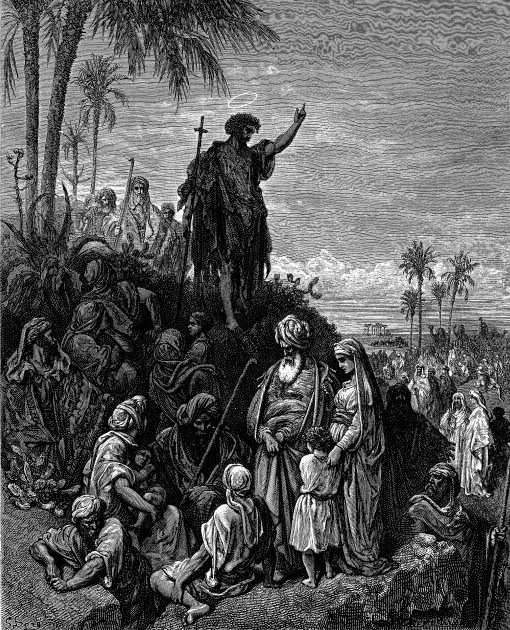
"Now John was clothed with camel’s hair and wore a leather belt around his waist and ate locusts and wild honey. And he preached, saying, “After me comes he who is mightier than I, the strap of whose sandals I am not worthy to stoop down and untie" (Mark 1:6-7).

Robert Murray McCheyne's Bible reading plan has me reading the Gospel of Mark. It is my private evening reading. Ah, John the Baptizer...


"It was when all men mused in their hearts whether John was the Christ or no, that he announced the coming of a Stronger One. By thus promptly silencing a whisper, so honorable to himself, he showed how strong he really was, and how unselfish “a friend of the Bridegroom.” Nor was this the vague humility of phrase which is content to be lowly in general, so long as no specified individual stands higher. His word is definite, and accepts much for himself. “The Stronger One than I cometh,” and it is in presence of the might of Jesus (whom yet this fiery reformer called a Lamb), that he feels himself unworthy to bend to the dust and unbind the latchets or laces of His shoe" (Strong Meat for Hungry Souls: The Gospel According to St. Mark by the Rev. G. A. Chadwick).

Friday, July 21, 2006

Hell hath no fury like a woman...


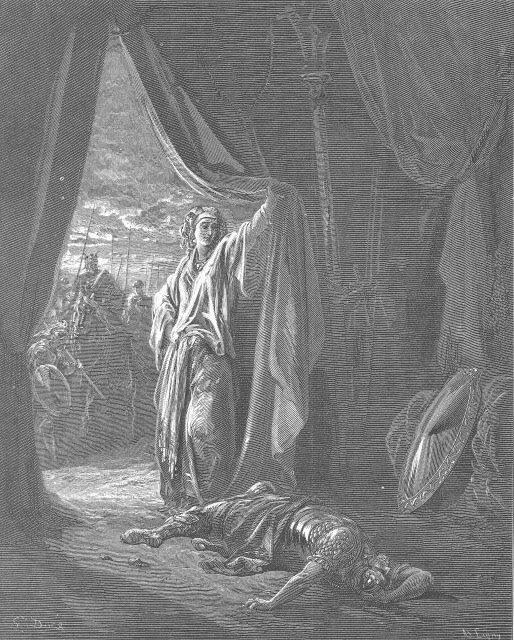
"But Jael the wife of Heber took a tent peg, and took a hammer in her hand. Then she went softly to him and drove the peg into his temple until it went down into the ground while he was lying fast asleep from weariness. So he died" (Judges 4:21).

My wife and I are reading through the book of Judges in the morning. We read chapter 4 this morning. Matthew Henry wisely comments, "Sisera’s chariots had been his pride and his confidence. Thus are those disappointed who rest on the creature; like a broken reed, it not only breaks under them, but pierces them with many sorrows. The idol may quickly become a burden, Isaiah 46:1; what we were sick for, God can make us sick of. It is probable that Jael really intended kindness to Sisera; but by a Divine impulse she was afterwards led to consider him as the determined enemy of the Lord and of his people, and to destroy him. All our connexions with God’s enemies must be broken off, if we would have the Lord for our God, and his people for our people. He that had thought to have destroyed Israel with his many iron chariots, is himself destroyed with one iron nail. Thus the weak things of the world confound the mighty. The Israelites would have prevented much mischief, if they had sooner destroyed the Canaanites, as God commanded and enabled them: but better be wise late, and buy wisdom by experience, than never be wise."

Thursday, July 20, 2006

The Weeping Prophet...


"Then the LORD said to me, 'Out of the north disaster shall be let loose upon all the inhabitants of the land. For behold, I am calling all the tribes of the kingdoms of the north, declares the LORD, and they shall come, and every one shall set his throne at the entrance of the gates of Jerusalem, against all its walls all around and against all the cities of Judah'" (Jeremiah 1:14-15).

Jeremiah was called "the weeping prophet" for good reasons. As an Israelite, could you imagine receiving God's Word of judgment on your people? As a preacher, could you imagine the heavy responsibility of pleading with the people to repent? As a prophet, could you imagine the unpopular task of declaring God's "woe" upon the people? If I would have been in Jeremiah's sandals, I would have cried like a baby.

Wednesday, July 19, 2006

The Mission...


And Jesus came and said to them, “All authority in heaven and on earth has been given to me. Go therefore and make disciples of all nations, baptizing them in the name of the Father and of the Son and of the Holy Spirit, teaching them to observe all that I have commanded you. And behold, I am with you always, to the end of the age” (Matthew 28:18-20).

The photo is Indian fortune teller by Per-Andre Hoffmann

Tuesday, July 18, 2006

The Christian Hope


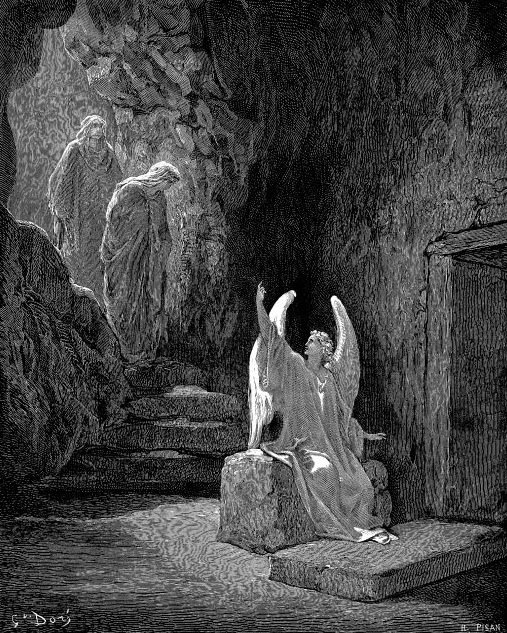
"But the angel said to the women, 'Do not be afraid, for I know that you seek Jesus who was crucified. He is not here, for he has risen, as he said. Come, see the place where he lay'" (Matthew 28.5-6).

Woe to us if we preach Christ crucified and leave Him in the grave! - John

Reading Recommendation


Gospel Fear


"True fear and trembling at the Word is that which will settle the heart and strengthen the heart against all other fears." Jeremiah Burroughs


This is an excellent collection of sermons preached by Jeremiah Burroughs (1599-1646). He was an English Congregationalist and a well-known Puritan preacher. He was a member of the Westminster Assembly and one of the few who opposed the Presbyterian majority.

While one of the most distinguished of the English Independents, he was one of the most moderate. He was know for his irenic spirit. Richard Baxter is quoted as saying if all Presbyterians had been like Stephen Marshall and all Independants like Jeremiah Burroughs, their differences might have been easily composed. Such a reputation is consistent with the motto on his study door (in Latin and Greek): "Opinionum varietas et opinantium unitas non sunt ασυστατα" ("Difference of belief and unity of believers are not inconsistent").

I would encourage you to buy this wonderful work. The church will be revived and strengthened by hearing these God-centered and heart searching sermons. You can buy it individually, or you can buy the entire Gospel Life Series, which would be my recommendation.

Grace to you,

John

Monday, July 17, 2006

Mindless Entertainment


This poor dog needs to protect its chew toy from the phantom foot reaching for the toy. Hilarious!

Friday, July 14, 2006

Picture of the Day


Picture of the aurora borealis


Psalm 8


TO THE CHOIRMASTER: ACCORDING TO THE GITTITH. A PSALM OF DAVID.
O LORD, our Lord, how majestic is your name in all the earth! You have set your glory above the heavens.
Out of the mouth of babes and infants, you have established strength because of your foes, to still the enemy and the avenger.

When I look at your heavens, the work of your fingers, the moon and the stars, which you have set in place,
what is man that you are mindful of him, and the son of man that you care for him?

Yet you have made him a little lower than the heavenly beings* and crowned him with glory and honor.
You have given him dominion over the works of your hands; you have put all things under his feet,
all sheep and oxen, and also the beasts of the field,
the birds of the heavens, and the fish of the sea, whatever passes along the paths of the seas.

O LORD, our Lord, how majestic is your name in all the earth!

The photo is Reflections in lake by Per-Andre Hoffmann

Thursday, July 13, 2006

A Postmodern Creed


The Creed of the Atheists by Steve Turner (English Journalist)

A Postmodern Creed

We believe in Marxfreudanddarwin.
We believe everything is OK
as long as you don’t hurt anyone,
to the best of your definition of hurt,
and to the best of your knowledge.

We believe in sex before during
and after marriage.
We believe in the therapy of sin.
We believe that adultery is fun.
We believe that sodomy’s OK
We believe that taboos are taboo.

We believe that everything’s getting better
despite evidence to the contrary.
The evidence must be investigated.
You can prove anything with evidence.

We believe there’s something in
horoscopes, UFO’s and bent spoons;
Jesus was a good man just like
Buddha, Mohammed and ourselves.
He was a good moral teacher although
we think his good morals were bad.

We believe that all religions are basically the same,
at least the one that we read was.
They all believe in love and goodness.
They only differ on matters of
creation sin heaven hell God and salvation.

We believe that after death comes The Nothing
because when you ask the dead what happens
they say Nothing.
If death is not the end, if the dead have lied,
then it’s compulsory heaven for all
except perhaps Hitler, Stalin and Genghis Khan.

We believe in Masters and Johnson.
What’s selected is average.
What’s average is normal.
What’s normal is good.

We believe that man is essentially good.
It’s only his behavior that lets him down.
This is the fault of society.
Society is the fault of conditions.
Conditions are the fault of society.

We believe that each man must find
the truth that is right for him.
Reality will adapt accordingly.
The universe will readjust. History will alter.
We believe that there is no truth
except the truth that there is no absolute truth.

We believe in the rejection of creeds and the flowering of individual thought.

Postscript

If chance be the father of all flesh,
disaster is as rainbow in the sky.
And when you hear:
state of emergency ,
sniper kills ten,
troops on rampage,
whites go looting,
bomb blasts school.
It is but the sound of man
worshiping his maker.

Wednesday, July 12, 2006

"Why is faith not enough?"


Are There Reconcilable Differences? A discussion continued from the previous blog post...


A real email exchange between two Protestants discussing the difference between the Roman Catholic and the Reformational view of salvation.


This discussion is also pertinent to some discussions among protestants thinking about reformulating justification.


Mr. Faith Plus Works
-------
Thank-you for your response. I have not read Dr. Sproul's book, Faith Alone-Doctrine of Justification but I have heard his argument and read his short explanation in Now, That's a Good Question. The question that comes to mind each time is what precisely does it mean to have the existence of each element?

Mr. Faith Alone
-------
It means that -

  1. you know certain facts (ie. I know that a chair is a piece of furniture that holds you up);

  2. you believe the facts that you know (ie. I have the conviction that if I sit on the chair that it would hold me up);

  3. you place personal trust in the facts you believe (ie. I sit in the chair and allow it to hold me up).


Mr. Faith Plus Works
-------
What if one has intellectual awareness, intellectual assent, and personal trust in Jesus and yet leads a life filled with sin? Are
we to suggest they are actually missing one of the elements or is there something more fundamental at work? Is the root cause simply that they are sinners and always will be and therefore never reach the plateau of perfect faith or belief?

Mr. Faith Alone
-------
If the person in question does lack any one of the mentioned components of saving faith then what he has is not saving faith. So it should not surprise us that he "leads a life filled with sin," because he is an unregenerated person. If the person in question does have all the components of saving faith then he is regenerate. The fact that he is not sinless should not surprise us. The Apostle Paul was a man with saving faith, but he was not sinless (see Romans 7:14-25). So the "root cause" is that we are simultaniouly saints & sinners and will not be free from sin until our glorification at Christ's second coming.

Mr. Faith Plus Works
-------
One other question why does it require all three elements to have saving faith?

Mr. Faith Alone
-------
Let us look at my chair example. I can neither believe that a chair will hold me up nor can I trust it to do so if I don't know things about it. I can have knowledge about a chair & how it functions but not trust it to do so if I don't believe in the facts. I can have knowledge about a chair & how it functions as well as believe the facts but not trust the chair to hold me up. Now take those examples and apply them to Jesus Christ and the gospel. If any of the three are lacking then you either -

  1. don't know Jesus;

  2. don't believe in Jesus;

  3. are not trusting in Jesus as Lord and Savior to uphold you. Demons know the facts about Jesus and believe the facts about Jesus, but I do not think anyone would say that demons have saving faith. Demons do not trust in Him as Lord and Savior (a couple of simple examples are Luke 4:33-35 and James 2:19).


Mr. Faith Plus Works
-------
Why is faith not enough?

Mr. Faith Alone
-------
It is enough. That is the point. Faith is the instrument that we use to take hold of the righteousness and atonement of Jesus Christ. Our works lend absolutely nothing to our justification. Beware, however, some people tend to think of faith as a work that justifies you although they would not state it like that. Jesus Christ's life and death justifies us before God. When people say that we are saved by faith alone, they say that it is the means to take hold of Jesus Christ's works.

Mr. Faith Plus Works
-------
And, what good is faith if I need to prove it to myself? If I have to know what is behind the door then I would be a liar to say I know what is behind the door by faith.

Mr. Faith Alone
-------
The issue is not proving your faith to yourself. "Now faith is the assurance of things hoped for, the conviction of things not seen" (Hebrews 11:1). The issue was sparked by an inquiry about "what does one mean when one says faith?" What is saving faith? This implies that Christians needed to use precise language to articulate a sufficient answer to minimize the vagueness of the term. The reformers articulated this formulation because they had the same question asked of them long ago. I feel that it is an accurate summary of biblical teaching.

Mr. Faith Plus Works
-------
I don't raise these questions to be argumentative, although I do enjoy that on occasion, but I raise them because I do wonder.

Mr. Faith Alone
-------
I hope this was helpful. I would really recommend the books I mentioned earlier, "Faith Alone-Doctrine of Justification by R.C. Sproul and especially Redemption:Accomplished and Applied by John Murray. They would be clearer and articulate the issue better than I could.

May the grace of Jesus Christ be with you,

Mr. Faith Alone

The photo is Borgund stavechurch by Per-Andre Hoffmann

Tuesday, July 11, 2006

Was Martin Luther Wrong?


Are There Reconcilable Differences?


A real email exchange between two fellows discussing the difference between the Roman Catholic and the Reformational view of salvation.


This discussion is also pertinent to some discussions among protestants thinking about reformulating justification.


Mr. Faith Plus Works
-------
I enjoy reading and listening to Dr. Sproul, but I always have one question when he raises this concern; what does one mean when one says faith? Does having faith mean uttering the words or does it mean something more? And, if it means something more then what does it mean?

Mr. Faith Alone
-------
Good question! If you want to know what Mr. Sproul means by 'faith', then I would recommend reading his book titled, "Faith Alone-The Evangelical Doctrine of Justification". He offers a clear and concise explanation of what he means by faith. He focuses on this question specifically on pages 75-88. He defends the threefold definition of saving faith that was agreed upon by orthodox, confessing Christians during the Reformation. "The constituent elements of saving faith are 1) notitia, 2) assensus, 3) fiducia. Each element was regarded as necessary for saving faith. None of these elements, even fiducia, taken alone or separately, is a sufficient condition for saving faith. All three are essential to it" (page 75).

Mr. Faith Plus Works
-------
When you answer the question do you reach the conclusion the difference between the two is not as great as thought?

Mr. Faith Alone
-------
The answer that we are led to by Scripture is that justification is by faith alone. This is the heart of the gospel that the Holy Spirit proclaimed through the Apostle Paul (Rom. 1:17; 3:21-5:21; Gal. 2:15-5:1). The necessary means, or instrumental cause, of justification is personal faith in Jesus Christ as crucified Savior and risen Lord (Rom. 4:23-25; 10:8-13). The meritorious grounds of our justification is entirely in Christ Jesus and His righteousness. "For by grace you have been saved through faith; and that not of yourselves, it is the gift of God; not as a result of works, so that no one may boast" (Ephesians 2:8-9).

The Catholic Church sees justification as a process. They affirm that faith contributes to our acceptance with God, but it is not sufficient to save. Our works of satisfaction and merit supply what is lacking to declare us right before God. Rome sees baptism as the primary instrumental cause of justification, and the sacrament of penance, whereby congruous merit is achieved through works of satisfaction, as the supplementary cause of restoring God's grace when one commits mortal sin. So believers save themselves with the help of the grace that comes from Christ by the churches sacraments. This is another gospel. Not that there is another, but it is a perversion of the one, true gospel of Jesus Christ. The Council of Trent of the Roman Catholic Church officially condemned the doctrine of justification by faith alone and its related teachings. Here are some of the most famous lines:

  • Canon 9: If anyone says that the sinner is justified by faith alone..., let him be anathema.

  • Canon 11: If anyone says that men are justified either by the sole imputation of the justice of Christ or by the sole remission of sins,... let him be anathema.

  • Canon 12: If anyone says that justifying faith is nothing else than confidence in divine mercy, which remits sins for Christ's sake, or that it is this confidence alone that justifies us, let him be anathema.

  • Canon 24: If anyone says that the justice received is not preserved and also not increased before God through good works but that those works are merely the fruits and signs of justification obtained, but not the cause of the increase, let him be anathema.

  • Canon 30: If anyone says that after the reception of the grace of justification the guilt is so remitted and the debt of eternal punishment so blotted out to every repentant sinner, that no debt of temporal punishment remains to be discharged either in this world or in purgatory before the gates of heaven can be opened, let him be anathema.

  • Canon 32: If anyone says that the good works of the one justified are in such manner the gifts of God that they are not also the good merits of him justified; or that the one justified by the good works that he performs by the grace of God and the merit of Jesus Christ...does not truly merit an increase of grace and eternal life... let him be anathema.


The above continues to be the official doctrine of the Roman Catholic Church to this very day. Thus, the difference between the two is much greater than many people realize. The differences are fundamental. Paul's reaction to such a distortion of the gospel (so as to remove all glory and sufficiency for salvation by grace alone, through faith alone, in Jesus alone) should be our reaction, and we should heed his apostolic woe. "Even if we, or an angel from heaven, should preach to you a gospel contrary to what we have preached to you, he is to be accursed! As we have said before, so I say again now, if any man is preaching to you a gospel contrary to what you received, he is to be accursed!" (Galatians 1:8-9)

I hope this was helpful.

May the grace of Jesus Christ be with you,
Mr. Faith Alone

The photo is Stuttgart, Schillerplatz by Per-Andre Hoffmann

Living By Faith


Living by faith


29 June 2006 An Article from Couldn't Help Noticing


Joseph was the epitome of success. From being imprisoned and with no apparent prospects at all, he rose to become the 2IC in all of Egypt, with all the trimmings and trappings of such a prestigious and powerful position.

Yet, as Hebrews 11:22 points out, he did not take his eyes off the promises of God—that his people would inherit a land that would be their own, and where God would be their God.

The writer is making the point that people like Joseph “desire a better country, that is, a heavenly one”. They are “aliens and strangers” where they live, because they long for heaven.

And as a result “God is not ashamed to be called their God”.

It is so easy to be caught up in the things of this world. I should think God would very often have cause to be ashamed of some of us who take the name of “Christian” upon ourselves, when we get so passionate about such temporal matters.

But here is the solution: remember the “great crowd of witnesses” who have given us such a great example of faith—”the assurance of things hoped for, the conviction of things not seen”. And “lay aside every weight, and sin which clings so closely, and let us run with endurance the race that is set before us, looking to Jesus, the founder and perfecter of our faith, who for the joy that was set before him endured the cross, despising the shame, and is seated at the right hand of the throne of God. (Heb 12:1-2)”.

Noticed by Ian at 08:44 AM

Photo titled "Sahara, sunset at the oasis" by Per-Andre Hoffman

Friday, July 07, 2006

THE PRAYER OF ST. FRANCIS


Lord, make me a channel of thy peace,
that where there is hatred , I may bring love ;
that where there is wrong , I may bring the spirit of forgiveness;
that where there is discord , I may bring harmony ;
that where there is error , I may bring truth ;
that where there is doubt , I may bring faith ;
that where there is despair , I may bring hope ;
that where there are shadows , I may bring light ;
that where there is sadness , I may bring joy .
Lord, grant that I may seek rather to comfort than to be comforted;
to understand, than to be understood;
to love, than to be loved.
For it is by self-forgetting that one finds.
It is by forgiving that one is forgiven.
It is by dying that one awakens to Eternal Life.

Wednesday, July 05, 2006

Monday, July 03, 2006

Together for the Gospel...


How do we "practice Christian unity as much as possible on the local level" according to Keller?


  • In Christendom, when 'everyone was a Christian' it was necessary (perhaps) for a church to define itself over against other churches. That is, to get an identity you had to say, "we are not like that church over there, or those Christians over here."

  • Today, however, it is much more illuminating and helpful for a church to define itself over against 'the world'--the values of the non-Christian culture. It is very important that we not spend our time bashing and criticizing other kinds of churches. That simply plays in to the common 'defeater' that Christians are all intolerant.

  • While we have to align ourselves in denominations that share many of our distinctives, at the local level we should cooperate and reach out to and support the other congregations and churches in our local area. This will raise many thorny issues, of course, but our bias should be in the direction of cooperation.

Sunday, July 02, 2006

We are radically different...


How do you "create Christian community which is counter-cultural and counter-intuitive" according to Tim Keller?

  • In Christendom, 'fellowship' is basically just a set of nurturing relationships, support and accountability. That is necessary, of course.

  • In a missional church, however, Christian community must go beyond that to embody a 'counter-culture,' showing the world how radically different a Christian society is with regard to sex, money, and power.

  • In sex. We avoid both the secular society's idolization of sex and traditional society's fear of sex. We also exhibit love rather than hostility or fear toward those whose sexual lifepatterns are different.

  • In money. We promote a radically generous commitment of time, money, relationships, and living space to social justice and the needs of the poor, the immigrant, the economically and physically weak.

  • In power. We are committed to power-sharing and relationship-building between races and classes that are alienated outside of the Body of Christ.

  • In general, a church must be more deeply and practically committed to deeds of compassion and social justice than traditional liberal churches and more deeply and practically committed to evangelism and conversion than traditional fundamentalist churches. This kind of church is profoundly 'counter-intuitive' to American observers. It breaks their ability to categorize (and dismiss) it as liberal or conservative. Only this kind of church has any chance in the nonChristian west.

Friday, June 30, 2006

Shaping Fellow Followers of Christ


What does it mean to "theologically train lay people for public life and vocation" according to Keller.

  • In 'Christendom' you can afford to train people just in prayer, Bible study, evangelism-private world skills--because they are not facing radically non-Christian values in their public life--where they work, in their neighborhood, etc.

  • In a 'missional' church, the laity needs theological education to 'think Christianly' about everything and work with Christian distinctiveness. They need to know: a) what cultural practices are common grace and to be embraced, b) what practices are antithetical to the gospel and must be rejected, c) what practices can be adapted/revised.

  • In a 'missional' situation, lay people renewing and transforming the culture through distinctively Christian vocations must be lifted up as real 'kingdom work' and ministry along with the traditional ministry of the Word.

  • Finally, Christians will have to use the gospel to demonstrate true, Biblical love and 'tolerance' in "the public square" toward those with whom we deeply differ. This tolerance should equal or exceed that which opposing views show toward Christians. The charge of intolerance is perhaps the main 'defeater' of the gospel in the non-Christian west.

Thursday, June 29, 2006

The Transformation of their Myths


What does it mean to "enter and re-tell the culture's stories with the gospel" according to Keller?

  • In "Christendom" it is possible to simply exhort Christianized people to "do what they know they should." There is little or no real engagement, listening, or persuasion. It is more a matter of exhortation (and often, heavy reliance on guilt.) In a missional church preaching and communication should always assume the presence of skeptical people, and should engage their stories, not simply talk about "old times."

  • To "enter" means to show sympathy toward and deep acquaintance with the literature, music, theater, etc. of the existing culture's hopes, dreams, 'heroic' narratives, fears.

  • * The older culture's story was--to be a good person, a good father/mother, son/daughter, to live a decent, merciful, good life.

    * Now the culture's story is-- a) to be free and self-created and authentic (theme of freedom from oppression), and b) to make the world safe for everyone else to be the same (theme of inclusion of the 'other'; justice).

  • To "re-tell" means to show how only in Christ can we have freedom without slavery and embracing of the 'other' without injustice.

Vulgar Languages...


What does "discourse in the vernacular" look like according to Keller?


  • In 'Christendom' there is little difference between the language inside and outside of the church. Documents of the early U.S. Congress, for example, are riddled with allusions to and references from the Bible. Biblical technical terms are well-known inside and outside. In a missional church, however, terms must be explained.

  • The missional church avoids 'tribal' language, stylized prayer language, unnecessary evangelical pious 'jargon', and archaic language that seeks to set a 'spritual tone.'

  • The missional church avoids 'we-them' language, disdainful jokes that mock people of different politics and beliefs, and dismissive, disrespectful comments about those who differ with us

  • The missional church avoids sentimental, pompous, 'inspirational' talk . Instead we engage the culture with gentle, self-deprecating but joyful irony the gospel creates. Humility + joy = gospel irony and realism.

  • The missional church avoids ever talking as if non-believing people are not present. If you speak and discourse as if your whole neighborhood is present (not just scattered Christians), eventually more and more of your neighborhood will find their way in or be invited.

  • Unless all of the above is the outflow of a truly humble-bold gospel-changed heart, it is all just 'marketing' and 'spin.'

Wednesday, June 28, 2006

What is a Missional Church?


The Elements of a Missional Church
5 awesome characteristics of churches committed to the mission of God as outlined by Tim Keller.

  1. Discourse in the vernacular

  2. Enter and re-tell the culture’s stories with the gospel

  3. Theologically train lay people for public life and vocation

  4. Create Christian community which is counter-cultural and counter-intuitive

  5. Practice Christian unity as much as possible on the local level


My prayer is that I will intentionally plant missional churches - points of light in a dark world.

Tuesday, June 27, 2006

What Can Religion Get Me?


Get thee to a nunnery
20 June 2006 An Article from Couldn't Help Noticing

The ABC will be filming a new reality TV series in August called The Abbey. Modelled after the BBC's The Monastery, in which five men went to live in Worth Abbey in West Sussex for 40 days and 40 nights, The Abbey will focus on the experiences of five women who will forsake the world to go live in rural Australia with an order of nuns for 33 days, one day for each year of Christ's life. They are expected to participate in the community by doing things like getting up at 4 am, praying and meditating, working on the farm, making handicrafts and taking vows of silence. (The latter, I am sure, will make very interesting television!) Each woman will be assigned a Sister who will be her spiritual mentor. Any questions or issues can be discussed with this Sister.

But what is the point of it all? Will the women be voted out of the abbey, one by one, week by week, based on how competently they say Hail Marys? Is there a million dollar prize or a nice car at stake? No, says the ABC, “[T]his is not a game show or competition. The reward is the unique experience” (source). Volunteers don't have to be Christian or even vaguely religious; they just have to be willing to “put their beliefs and lifestyle to the test” and be open to “another very different way of life”—a simpler way of life—one without mobile phones, television or the internet.

Such an approach betrays a consumerist mindset: it's about what religion can give me. In this case, it's the thrill ride—some sort of higher undefined spirituality brought on by mild asceticism—an alternative to the frenetic pace of modern life. It's about experience, not relationship; the journey, not the destination. It's certainly not about acquainting oneself with one's creator and judge.

‘Reality’ TV? You be the judge.

Noticed by Karen at 10:53 AM

Monday, June 26, 2006

Sad Example of Catnip Addiction

Looking out For #1 - Part II


Looking out for #1 - Part II
7 June 2006 Article from Couldn't Help Noticing

"The below mentioned article struck me in another way. I’ve often wondered about people who lose their faith because of a tragedy. People always have serious questions about God and the meaning of suffering when they are confronted with an awful event such as Hurricane Katrina. There is nothing unusual or even wrong with that kind of questioning. It becomes dangerous when such a person persists in what is an explicitly selfish line of thinking.

The woman in the article said that she lost her faith in God because of the devastation caused by Katrina. Being a resident of New Orleans at that time, she witnessed all of it personally. But, in our age of information, we’ve all had ample enough information about any tragedy to question God and potentially lose our faith. Why wouldn’t seeing the devastation from the Tsunami cause her to lose her faith? Why wouldn’t reading about Auschwitz in her history classes cause her to lose her faith? It seems that her loss of faith isn’t so much about trusting a God that could let this happen as it is about trusting a God who could let this happen to her.

I’ve dealt with similar issues when people suffering an unexpected loss of a loved one. I had one such person begin to question God’s fairness in allowing “bad people to live but good people to die young.” This is a natural response to such an event; but the questioning continued to the point where this person was seriously considering giving up believing in a fair and just God. So, in a loving way, I had to point out to that she had to witness many similarly unfair happenings in her life – through friends, news, history, etc. Why was it this event that caused her to think this way? It was because the unfairness hit closer to home than it ever had before.

Both types of situations provide genuine opportunity to bring people back to the person of Jesus Christ. He is the only one who provided a cure for selfishness and a demonstration of absolute selflessness."

Noticed by Marty at 10:22 AM

Saturday, June 24, 2006

Reality Check

I am sure that you have seen those cheesy optimistic motivational posters. Yep, those are the ones. Well someone was finally brave enough to make some posters that reflect reality. Lets be honest...

Thursday, June 22, 2006

Looking Out For #1


Looking Out for #1
6 June 2006 AD

When I check my e-mail, there are always links to news articles on the side of the page. One such link caught my attention – “She’s lost her faith – he’s mad”.

The article was one of those write-in question therapy columns. A young lady living in New Orleans lost her faith after the devastation from Hurricane Katrina. She is dating a young man who is troubled by the fact that she doesn’t share his faith in the Lord. So, she sought help from this “expert” on love and relationships.

Some of the advice given wasn’t bad. However, I couldn’t help noticing one of the recommendations:

“Look out for number one: It may not be a very Christian concept, but right now you need to do whatever it takes to feel hopeful about life in general. Don’t invest time or emotion in people who don’t make you feel good. This doesn’t mean the only people you can hang out with should constantly feed your ego, but you should be getting something (confidence, security, benevolence) from the interaction.”

Of course, this advice doesn’t surprise me. What does surprise me is how open the “expert” was in pointing out that her advice wasn’t Christian. It is rare that someone will openly admit something like that.

However, what troubled me the most was how much I fail to live up to my own judgment. It was so easy for me to spot that sentence: “Don’t invest time or emotion in people who don’t make you feel good”. I was so quick to realize how this is the antithesis of Christian love. Christian love is about giving and sacrificing for the sake of another, just as Christ did for us, no matter what is given in return. Yet, as I thought about my circle of friends and acquaintances, I realized that I do not act differently than the advice I was so quick to condemn.

Luke 6:32, 35 “If you love those who love you, what benefit is that to you? For even sinners love those who love them … But love your enemies, and do good, and lend, expecting nothing in return, and your reward will be great, and you will be sons of the Most High, for he is kind to the ungrateful and the evil.”

Noticed by Marty at 09:41 AM

(Yes, that is a picture of a young George Michael.)

Wednesday, June 21, 2006

Equipping Women

Equipping women
30 May 2006 Article from Couldn't Help Noticing

During a lunch break at the recent EQUIP conference, where my colleague John Sammut and I were running the bookstall, we nipped into the closest coffee shop for some sustenance. John knew the owner of the coffee shop and went over to say hello.

The owner of the coffee shop, who was not a Christian, asked John why he was at Darling Harbour, and John explained that there was a big convention of Christian women just next door.

“Oh that explains it then!” says the owner.

“What do you mean?”, says John.

“I was wondering why all our customers were so nice this morning. And that explains it.”

“You can really notice a difference?”

“Sure,” says the owner, “last weekend there was a convention and the people were just horrible.”

“Who was at the other convention?”

“Real estate agents.”

Praise God that the godliness of the women saints at Darling Harbour on Saturday can bear such testimony to the grace of God in this way.

Noticed by Ian at 10:21 AM

Tuesday, June 20, 2006

Dying to be thin


When I am dead, with the insurance paid,
You'll look down at me and you'll grin.
You'll say, "well, the boy tried, and he suffered and died,
But don't he look good when he's thin?

By Shel Silverstein, one of my favorite poets!

Worn out


We just made it back from a twelve day journey visiting churches with a few visits to family thrown in. It gave us a better idea of our options, and I was encouraged. I am very excited about growing God's church through church planting. However, I will need to pray for God's leading.

I preached on the 11th. The Lord gave me an unusual lucidness and unction. I am very thankful.

We are trying to rest now. (My wife had to go back to work this morning. So much for her getting to rest!)

Wednesday, June 07, 2006

Spouse Endorsed What?


A New Solution to an Old Problem
18 May 2006 Article from Couldn't Help Noticing

A little while ago, there was an article in ESPN The Magazine that millions of American men would have ripped out to show their wives. Most of these men don’t normally think that their wives are interested in an article from one of the most popular sports magazines in America. Yet, one article in the recent edition will catch the eye of both sexes. I can imagine the scene now, as if taken directly from a sitcom. The beer-bellied man shoving the pages at his wife saying, “See! She understands! Why can’t you be more open-minded?”

The reference is to the marriage arrangement of NBA basketball star Andrei Kirilenko and his wife Masha Lopatova. Masha, a pop music star in her home country Russia, discloses her angst at Andrei’s numerous road games and superstar status: “Male athletes in this country [USA] are extremely attractive. They get chased by women. It’s hard to resist. It’s the way men are by nature.”

So, she came up with what she calls “Andrei’s allowance”. According to the article’s writer, “Once a year he can have sex with another woman. One night. No affairs, no divided loyalty. She can live with that. It was her idea, offered as a gift.” How is it that she can live with that? “When I’m aware and I let him do it, it’s not cheating,” Masha says.

What is Andrei’s response? The article is about his fit into his conservative coach’s offensive system, so the following response may be a double entendre, “If something is not allowed you, you want to get it, if it is allowed to you, you will not need it.”

Of course, men all over the country will think this is great logic. Unfortunately, this is a most absurd justification for infidelity. The irony is that Masha proclaims her knowledge of man’s nature but then completely falls prey to naïveté on the same subject. Does she really think that if Andrei accepts her “gift” and acts upon it that there will be no divided loyalty? That it would be only one time? Further, if she knew that tonight was the night that Andrei was accepting her “gift”, how much will she be able to “live with it” as she sits at home reading a nice bedtime story to their young child?

Hopefully, our imaginary beer-bellied friend will have a wife who will see through this charade. Unfortunately, Andrei and Masha are ever so real. As Tony Payne and Phillip Jensen say in Pure Sex, “Sexual immorality, such as adultery, is profoundly destructive. And when a society has abandoned itself to it, as ours has, the effects are disastrous.” The effects are clearly seen in Andrei and Masha’s relationship and the millions of men who may think that this couple is on to something.

Noticed by Marty at 10:15 AM

Where are the women priests?


Where are all the women priests?
24 May 2006 Article from Couldn't Help Noticing

When the women’s ordination debate was in full swing (in the late 1980s and early 1990s) a panoply of arguments was put forward as to why we should all get on board, do the right thing and ordain women as priests/presbyters. We were told that our witness to an unbelieving world would never be effective until we removed the stumbling block of excluding women from leadership. And we were told that the ‘evangelical’ case for women’s ordination had been made, and that many evangelicals were willing to get with the programme, presumably to the shame of those recalcitrants (like this author) who remained utterly unconvinced.

As the ever-perceptive John Richardson points out in a recent issue of ‘New Directions’, neither of these contentions have proved true. More than a decade after the ‘women’s ordination wars’, the vast majority of women priests in the Anglican church in the UK are liberal, and none of them are running large churches:

“Excluding cathedrals, there are about 160 Anglican churches with ‘Usual Sunday Attendances’ in excess of 350. The majority are growing, many of them are evangelical, and all the senior ministers of these churches are male. When pastoral push comes to shove, it seems that congregations instinctively congregate around male leadership.

“If, as we have been told, most evangelicals have no problem with the ordination of women, we should expect this picture to change, so that the proportion of women running larger churches corresponds to the proportion of clergy who are women. However, whilst women are found in every ‘senior’ position from dean to archdeacon, and will soon be bishops, they have yet to be found running big churches, evangelical or otherwise.”

Judging by the tiny numbers of evangelical women being ordained, it seems that evangelicals as a whole are actually not convinced at all about women’s ordination. Those who are convinced congregate almost entirely in the liberal wing, and the churches that they run are hardly being overrun by grateful atheists willing at last to embrace the gospel now that a woman is in charge.

The liberal churches, in which the vast majority of women priests serve, continue to decline, while the evangelical arm of the denomination, in which there are very few women priests, continues to be the only sector showing any growth.

Noticed by Tony at 01:03 PM

Tuesday, June 06, 2006

Life According to B.B.


The Authority and Inspiration of the Scriptures by Benjamin B. Warfield (1851-1921)

The following is a portion of a short essay originally published in the Westminster Teacher, September 1889. The electronic edition of this article was scanned and edited by Shane Rosenthal for Reformation Ink. It is in the public domain and may be freely copied and distributed.

"Let it be observed that the proof of the authority of the Scriptures does not rest on a previous proof of their inspiration. Even an uninspired law is law. But when inspiration has once been shown to be fact, it comes mightily to the reinforcement of their authority. God speaks to us now, in Scripture, not only mediately through his representatives, but directly through the Scriptures themselves as his inspired word. The Scriptures thus become the crystalization of God’s authoritative will. We will not say that Christianity might not have been founded and propagated and preserved without inspired writings or even without any written embodiment of the authoritative apostolic teaching. Wherever Christ is known through whatever means, there is Christianity, and men may hear and believe and be saved. But God has caused his grace to abound to us in that he not only published redemption through Christ in the world, but gave this preachment authoritative expression through the apostles, and fixed it with infallible trustworthiness in his inspired word. Thus in every age God speaks directly to every Christian heart, and gives us abounding safety to our feet and divine security to our souls. And thus, instead of a mere record of a revelation given in the past, we have the ever-living word of God; instead of a mere tradition however guarded, we have what we have all learned to call in a unique sense 'the Scriptures'."

Monday, June 05, 2006

Deep Thoughts


Maybe in order to understand mankind, we have to look at the word itself: "Mankind". Basically, it's made up of two separate words - "mank" and "ind". What do these words mean ? It's a mystery, and that's why so is mankind.

Deep Thoughts by Jack Handy Saturday Night Live

Friday, June 02, 2006

Wright Is Wrong


The Wright stuff - An Article by Couldn't Help Noticing

Noticed by Tony at 09:50 AM on 1 June 2006 AD

I have always been told that Bishop N. T. (Tom) Wright of New Perspective fame is a very gifted speaker. Judging by his performance on a recent Aussie sojourn, one can only agree. Not only does he communicate his ideas clearly and winsomely, he is also a very clever Christian polemicist—by which I mean that he is highly skilled in the kind of debating that we Christians find appealing: polite, disarming, and slightly self-deprecating, with plenty of Bible quotes thrown in.

A case in point was Bishop Wright’s seminar/debate with Bishop Paul Barnett on ‘Fresh Perspectives in Paul’. At one point in the discussion, the two men were asked about their views of the place of Christian behaviour or good works in justification at the last judgement.

Bishop Wright’s response was as follows:

“My view of the place of good works in justification at the last judgement is I hope exactly that of Paul in Romans 2:1-16, and in Romans 14 and in 2 Corinthians 5, where it is quite clear that the things that Christians do in the power of the Spirit in obedience to Christ in the present will be part of the evidence submitted on the last day. That has nothing to do with works-righteousness in the usually fashionable sense—nothing to contribute to justification by faith in the present, as the thing which constitutes the Christian in the present as dikaios (righteous).

“Interestingly we had a big discussion about this at Rutherford House a few years ago [2003]; the papers of that conference are in the process of being published, edited by Bruce McCormack from Princeton, and anyone interested in that topic might well be interested to see how that discussion played out. Because there is a fear among many in the evangelical tradition that to say there is anything to do with works in relation to anything to do with justification is to creep back into synergism.

“By the way the first word of 2 Corinthians 6 is sunergountes—being synergistic with God—in exactly this context, working together with God. It is not that we earn our salvation—in Romans 2, Paul says very clearly: ‘those who by patience in well-doing seek for glory, honour and immortality, to those he will give eternal life’. So I am simply pinning my statement there on Paul’s precise statement in Romans 2:1-12.”

The position being taken here is disturbingly close to Roman Catholicism, in which our justification on the last day is based not only on Christ’s atoning death but also on the good works which we have done in cooperation with the work of God’s Spirit in our lives (sometimes referred to as ‘synergism’). The good works are part of the evidence that results in justification.

Now, it would hardly have been very wise for Bishop Wright to preface his answer by saying, “My position on this question is essentially that of the Council of Trent”. Instead, he begins by pleading that what he is about to say is only what Paul himself “exactly” says in three passages. (Don’t shoot the messenger: I’m only saying what Paul says.) He then throws a bit of rhetorical dust in the air by saying he is not talking about “works-righteousness in the usually fashionable sense” with respect to how we are justified by faith now in the present—which is a distraction because it’s not the question at hand. And then he executes a classic ‘straw man’ manoeuvre, by raising the supposed fear of evangelicals that “anything to do with works in relation to anything to do with justification is to creep back into synergism”.

Now evangelicals are rightly wary of creeping back into synergism, but I don’t know any evangelicals who think that “anything to do with justification in relationship to anything to do with works” inevitably leads us to synergism. Evangelicals have been talking about the relationship between justification and works for centuries. We think it’s vital to understand the relationship properly. We just happen to think that synergism is the wrong answer.

I’m not sure whether the polemical skill had its desired effect on the crowd. It certainly didn’t fool Paul Barnett. His response was as follows:

“I think we have a difference here, Tom. 2 Corinthians 5-6 is about Paul’s apostolic ministry not about his specific relationship with God but how he exercises his ministry as an ambassador of Christ, and as a Holy Spirit-empowered co-worker of God. I think the Romans 2 passage sets out the necessary theory of the righteousness of God as being the basis of all judgement—God is impartial and he will not have favourites in terms of judgement. Then I think as the letter unfolds further he is saying that there is therefore in Christ no condemnation. Justification by faith is complete. I do however think that there is a doctrine of the evaluation of the justified in terms of commendation—commendation given and commendation withheld. But that is I believe of those who are justified by grace who in Christ do not face any condemnation, since Christ himself has borne that condemnation in our place.”

This is a classic expression of biblical Reformed Protestantism—that whatever part our good works play in the final judgement, they do not secure our escape from condemnation (that is, our justification). That is achieved completely, finally and fully on the ground of Christ’s atoning work on our behalf.

Bishop Wright then responded:

“I’m happy with that. Although I could perhaps just comment that Romans 8—no condemnation—goes on with a sequence of gars: because this because that because the other. And one of those gars is because by the Spirit you now actually do what the law requires. I mean I know it’s a controversial verse—to dikiaoma tou nomou in Romans 8:4.”

To diminish the sense that he is saying anything unorthodox, Bishop Wright firstly avers that he’s “happy with that”, even though Bishop Barnett has directly contradicted him. But then to show that he hasn’t really changed his mind, he cites a contentious reading of Romans 8:4 in support of his earlier position, namely that condemnation is avoided by us fulfilling the righteous requirements of God through the work of the Spirit in us (synergism again).

Judging by the murmurs and chuckles of the crowd, and by the fact that no-one followed through on this, it seems that many of those present found Bishop Wright’s answer satisfactory. Just goes to show what a bit of charm and polemical skill can achieve.

Thursday, June 01, 2006

An Article from Couldn't Help Noticing


Touche from Couldn't Help Noticing 29 May 2006 AD

It seems that Rev. Gordon Cheng is not the only Christian apologist beavering away in the nation’s letter pages. An alert reader spotted the following exchange in the pages of The Australian:

“Tim Saclier (Letters, 23/5) has summed up beautifully the old cliche that religion is a triumph of superstition and blind faith over reason and logic. My own epiphany came at the age of 12, when my Sunday school teacher, in reply to my asking who created God, informed me with a straight face that God had always existed. I refused to attend further religious instruction on the grounds that I was being taught by idiots. My Sundays were then spent happily playing in the local swamp, where I observed many of the creatures from which I had actually evolved. Peter West, The Vines, WA”

To which came the following riposte:

“Peter West (Letters, 24/5) reminded me of my old science teacher, to whom, at the age of 12, I posed the question, “Who caused the big bang?” He answered me, with a straight face, that nothing caused it, to which I promptly replied that something must have because it obviously happened. It was at that point that I had an epiphany: my science teacher could not give me an answer that was either reasonable or logical. My Sundays were then happily spent attending Sunday school and learning about the God who created me. Bruce Newberry, Mansfield, Qld.”

Noticed by Tony at 10:32 AM